

MASTER OF THE EMBROIDERED FOLIAGE
Active in Brussels and Bruges, circa 1490 – 1510
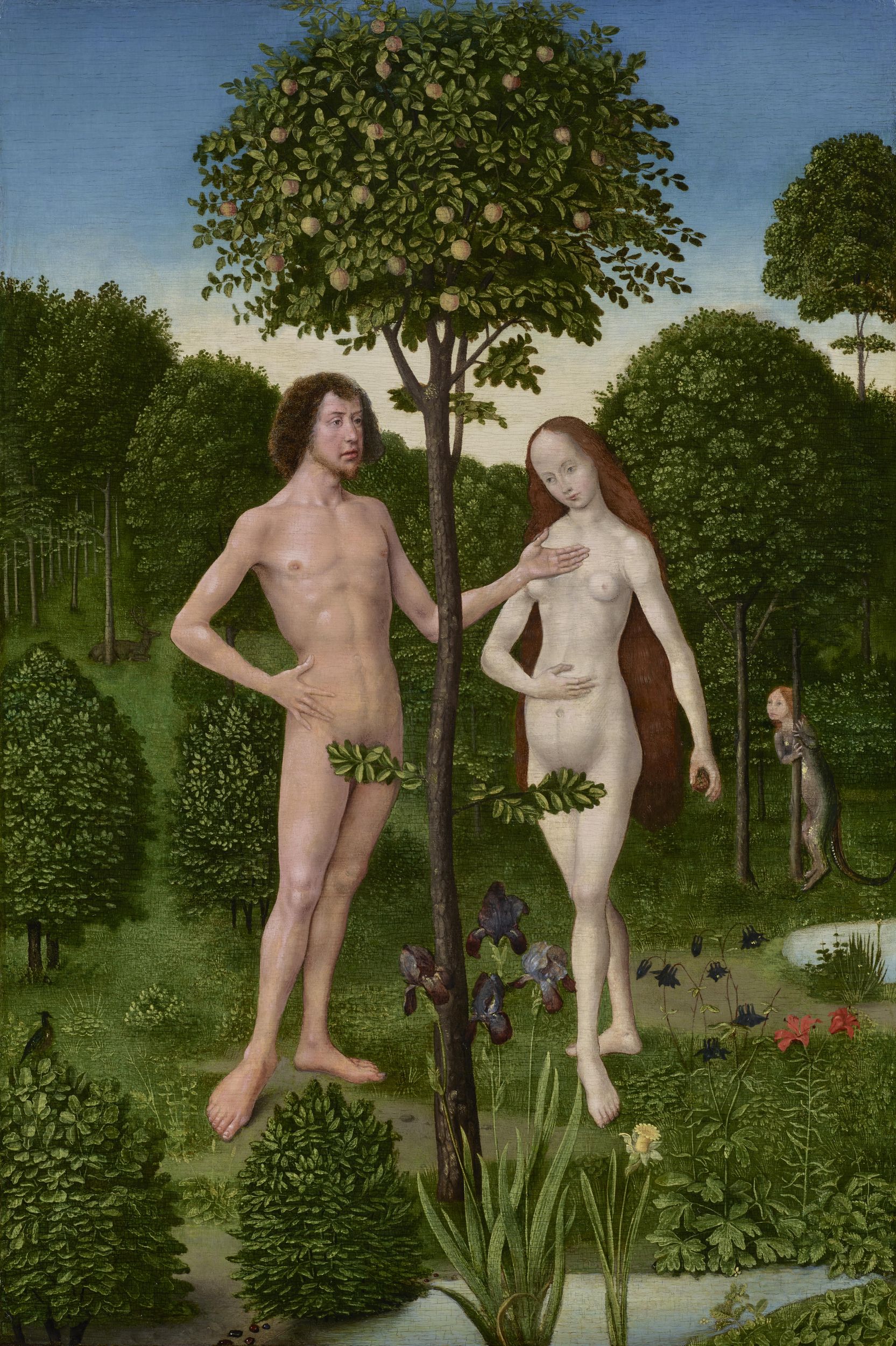
In 1926, M.J. Friedländer attributed a group of paintings to the anonymous Master of the Embroidered Foliage, so called because the foliage and greenery resembled the repeated pattern found in embroidery. The works include paintings of Virgins and saints, such as the triptych of the Virgin and Child with four angels in Polizzi Generosa (Sicily), the Madonna and Child with musical angels at the Palais des Beaux-Arts de Lille, and the Virgin and Child in a landscape at the Diocesan Museum in Burgos. The distinguishing mark of the works by this artist is the meticulous and repetitive rendering of the foliage, similar to embroidery stitches. In addition, the works of the Master of the Embroidered Foliage display a tendency towards highly decorative effects, as well as a significant focus on landscape, whose omnipresence sometimes almost dominates the principal figures placed in the centre.
The painter lived in Brussels between the end of the 15th century and the beginning of the 16th century, and was undoubtedly the head of a large workshop. His art is marked by the influence of Rogier van der Weyden (c. 1399/1400–1464) especially in his Madonnas, although he succeeds in adding his personal touch, thus differentiating him from the master. His work also bears a resemblance to that of his contemporary Gerard David (c. 1460–1523), established in Bruges, to whom a number of his works were attributed prior to Friedländer’s study in 1926. This results from the fact that the interest in landscape, as well as the delicate figures of the Virgins and other saints, was not typical of a Brussels artist.
He is especially known for his religious scenes portrayed in magnificent landscapes, which rely on a repertoire of time-tested models: flowers, foliage and buildings reappear from one work to another, bearing witness to the reuse of motifs as well as his clients’ taste for this type of composition.
Find out more