

JAN MANDIJN
Harlem 1502 – Antwerp 1560
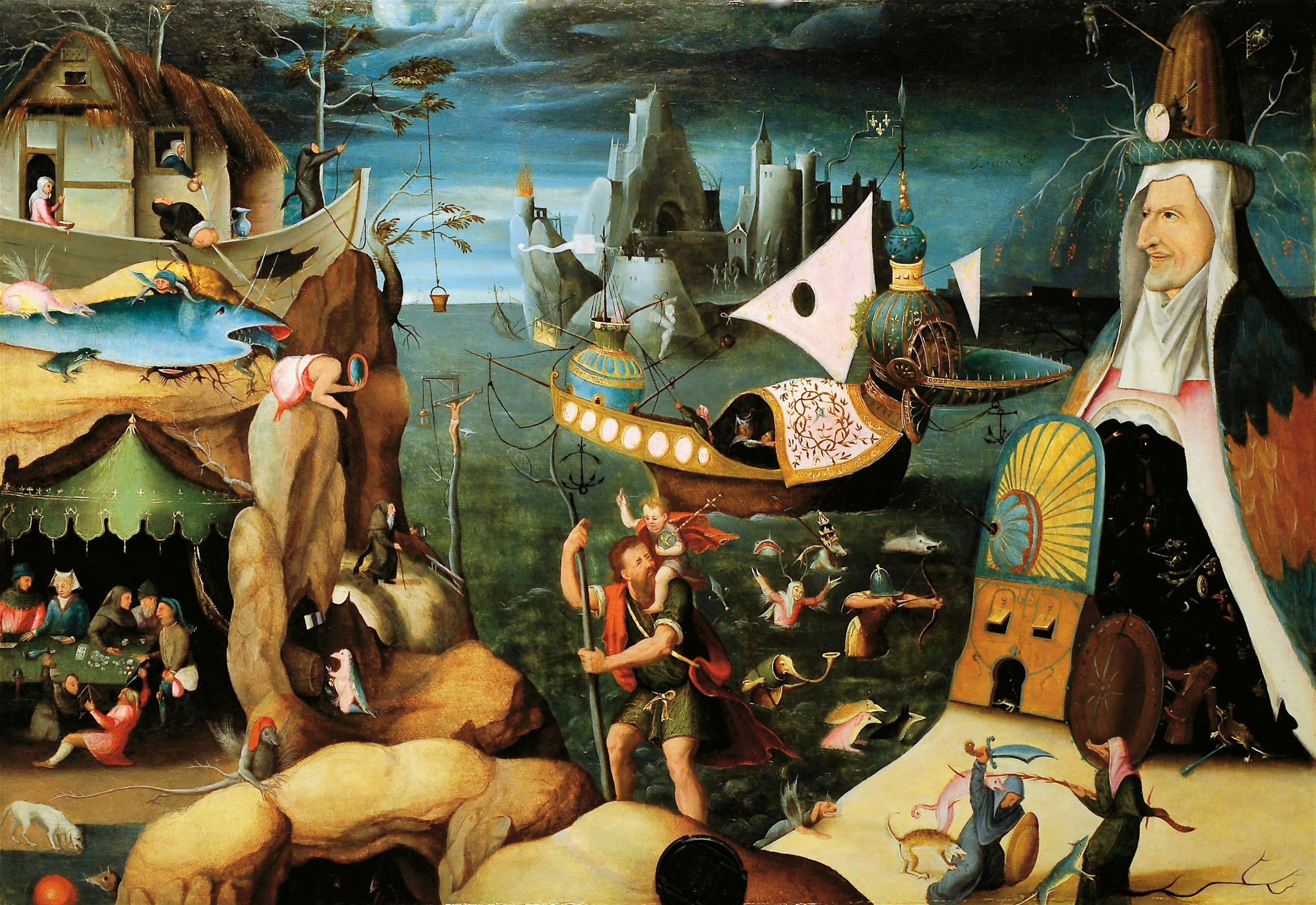
Born in Harlem in 1502, Jan Mandijn settled in Antwerp in 1530. He very rapidly built himself an excellent reputation there through his portrayals of dreamlike scenes such as his versions of the Temptation of Saint Anthony and Saint Christopher for which he drew largely on the fantastic creatures of Hieronymus Bosch, just like Pieter Huys. However, his amusing rather than truly disturbing compositions do not possess this fearful background that is characteristic of the Bois-le-Duc master. In just as characteristic a way, the paintings of Mandijn stand out owing to the heightened realism of his landscapes, often painted with supple and broad brushstrokes. It has become customary to group together a certain number of paintings that are kept in Antwerp, Bruges, Douai, Florence, Vienna and Saint Petersburg; amongst these works are subjects such as the Temptation of Saint Anthony, The Torments of Hell or The Last Judgment.
The privileged links he maintained with Pieter Aertsen, as well as the portrait painters that were apprenticed to him such as Jan Mostaert and Bartholomeus Spranger, leads us to believe that the painter’s work was not confined to the fantasy genre with which his name is systematically associated. Several art historians tried somewhat too quickly to attribute to Jan Mandijn the works thought to be the hand of the Master of the Prodigal Son. More recently, a link was suggested with the mysterious figure of the Master of Paul and Barnabus. While there are certainly works by Mandijn that remain to be discovered, it is important to note that the artist enjoyed great respect and public recognition during his lifetime that exceeded the profile of a mere epigone of Bosch, to which he is generally reduced. He thus received an annual pension from the Town of Antwerp for his work as decorator of the Ommegang, a major task entrusted to one of the town’s most renowned artists.
Find out more