

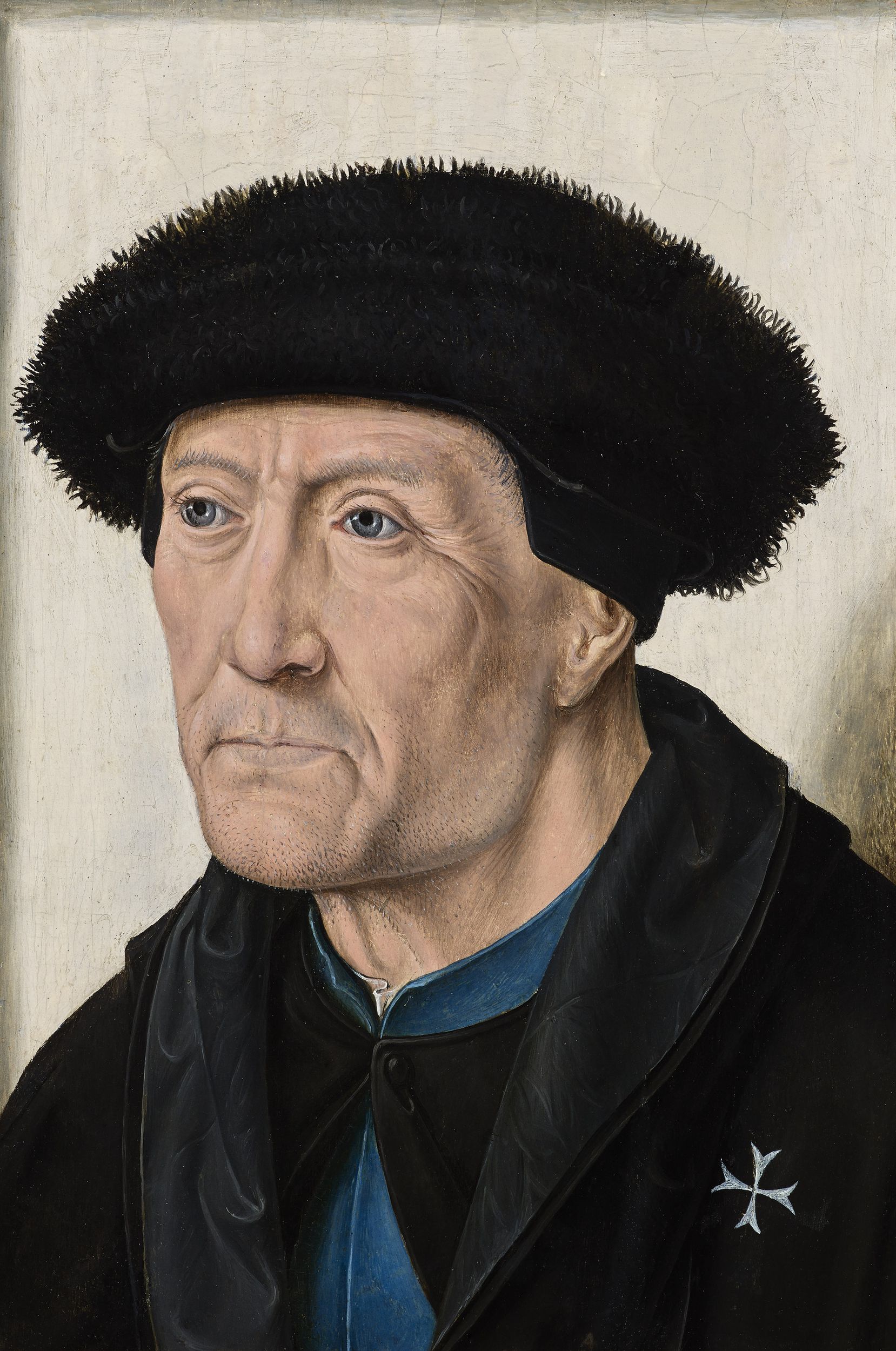
ALBRECHT BOUTS
Circa 1451/1455 – Leuven –1549
The youngest son of the famous Flemish primitive artist Dirk Bouts, Albrecht Bouts, took over his father's studio in Leuven upon his death in 1475 and maintained their pictorial tradition until the late 16th century. Albrecht and his studio were particularly well known for the serial production of paintings for private worship, which met an ever-increasing demand at the turn of the 15th century and a success extending beyond the borders of the former Low Countries.
As dean of the important Guild of Drapers in Leuven, Albrecht Bouts belonged to the town's bourgeoisie through his status and marriage to the wealthy Elisabeth Nausnyders. In 1492, the painter and his wife lived in a house adjoining the prestigious Notre-Dame-hors-les-murs chapel and he subsequently became its sexton, as mentioned in an act dated 1504. It was an important building exhibiting the famous Descent from the cross by Rogier van der Weyden, now conserved at the Prado Museum in Madrid. The painting was commissioned before 1435 by members of the Great Guild of Crossbowmen, alongside the Altarpiece of St. George made for the chapel in 1493 by Jan II Borman, a highly reputed sculptor from Brussels. According to the account of the historian Jan Molanus (1533-1585), Albrecht Bouts donated an altarpiece to the chapel dedicated to Notre-Dame: a Triptych of the Assumption of the Virgin, now kept at the Belgian Royal Museums of Fine Arts. Art historians generally believe it to have been executed between 1495 and 1500. The painter appears in the masterpiece as the donor, accompanied by his wife on the right hand side of the triptych. In 2011, a second self-portrait of Albrecht Bouts was identified on the basis of this effigy: the Portrait of a man with a skull which belongs to the Brukenthal Collection in Sibiu.
Find out more